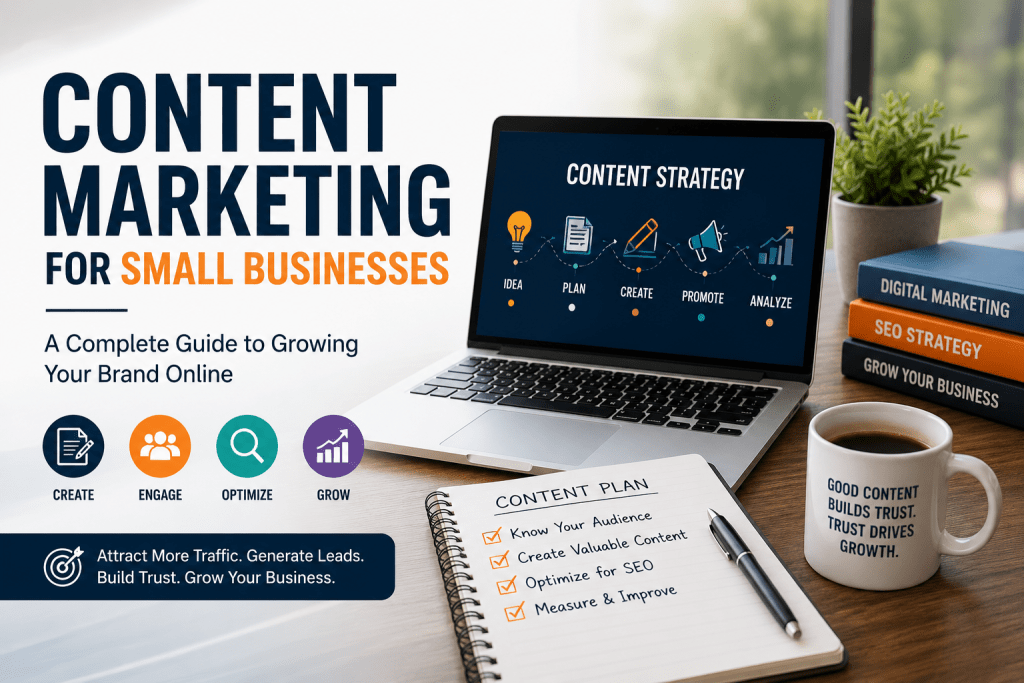
Small businesses often face the challenge of competing with larger companies that have bigger marketing budgets. The good news is that content marketing helps level the playing field. By creating helpful, informative, and engaging content, small businesses can attract potential customers, improve search engine rankings, and build lasting relationships without relying solely on paid advertising.
Content marketing has become even more valuable as search evolves beyond traditional Google results. AI-powered search experiences like Google AI Overviews, ChatGPT, Gemini, and Perplexity increasingly prioritize trustworthy, well-structured, and helpful content. Businesses that consistently publish quality content have a greater opportunity to increase their visibility across both search engines and AI platforms.
In this guide, you'll learn what content marketing is, why it matters, and how to create a strategy that helps your small business generate more traffic, leads, and long-term growth.
Quick Answer: What Is Content Marketing for Small Businesses?
Content marketing for small businesses is the process of creating and sharing valuable content that educates, informs, or solves problems for your target audience. Instead of directly selling your products or services, content marketing builds trust and positions your business as an industry expert.
Examples include blog articles, service pages, videos, case studies, FAQs, email newsletters, and social media content. When combined with SEO, content marketing helps increase organic traffic, improve search rankings, and generate qualified leads.
Quick Content Marketing Checklist
- Understand your target audience.
- Research keywords your customers are searching for.
- Create helpful blog content consistently.
- Optimize every page for SEO.
- Use internal links to related content.
- Include compelling calls-to-action.
- Track performance using Google Analytics and Search Console.
- Update existing content regularly.
Bottom line: Content marketing is one of the most cost-effective ways for small businesses to improve online visibility, attract qualified traffic, and build customer trust over time.
1. What Is Content Marketing?
Content marketing is a long-term digital marketing strategy that focuses on creating valuable content for a specific audience. Rather than interrupting people with advertisements, content marketing attracts potential customers by answering their questions and providing useful information.
According to the Content Marketing Institute, successful content marketing helps businesses build trust and nurture customer relationships by consistently delivering relevant content.
Content can take many forms, including:
- Blog posts
- Service pages
- How-to guides
- Case studies
- Videos
- Infographics
- Email newsletters
- Customer success stories
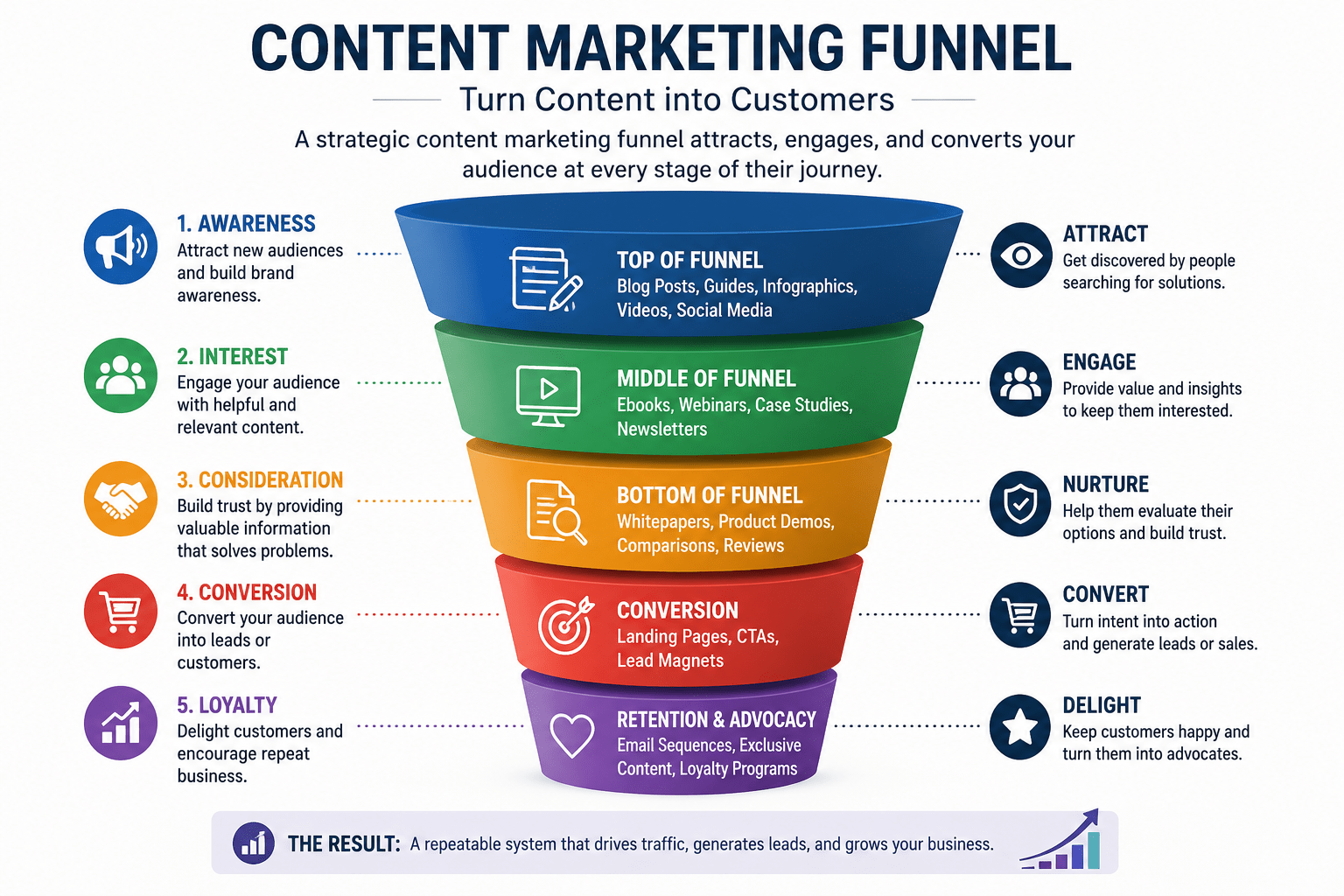
Every piece of content should provide genuine value while guiding visitors toward the next step in their buying journey.
2. Why Content Marketing Matters for Small Businesses
Unlike paid advertising, quality content continues working long after it's published. A helpful article can attract visitors for months—or even years—through search engines and AI-powered search platforms.
Content marketing also supports your overall SEO strategy. Google's Search Central recommends creating people-first content that demonstrates expertise, experience, authoritativeness, and trustworthiness (E-E-A-T).
Some of the biggest benefits include:
- Higher Google rankings
- More organic website traffic
- Better brand awareness
- Increased customer trust
- Higher-quality leads
- Long-term marketing assets
- Greater visibility in AI-generated search results
According to the U.S. Small Business Administration (SBA), maintaining a strong online presence is an important factor in helping small businesses reach new customers and remain competitive.
3. Build a Content Marketing Strategy
Publishing random blog posts rarely delivers consistent results. A successful content marketing strategy begins with understanding your audience and creating content that aligns with their needs throughout the customer journey.
Know Your Audience
Identify your ideal customers by understanding their goals, challenges, and common questions. The more relevant your content is, the more likely it is to attract qualified visitors.
Research Keywords
Use keyword research tools to discover what your audience is actively searching for. Resources such as Google Trends can help identify emerging topics, while professional SEO tools provide search volume and competition insights.
Create a Content Calendar
Consistency is one of the keys to long-term success. Planning content in advance helps maintain a regular publishing schedule while ensuring your articles support your overall business goals.
Match Search Intent
Every article should answer a specific question or solve a particular problem. Focus on providing complete, practical answers rather than simply targeting keywords.
Measure Your Results
Monitor your performance using Google Analytics and Google Search Console. These free tools help you understand how visitors find your website, which pages perform best, and where improvements can be made.
For businesses looking to maximize results, combining content marketing with a comprehensive SEO Content Strategy helps ensure every article supports your long-term search visibility.
💙 SERPWeave Pro Tip: Before publishing any content, make sure it targets one primary keyword, includes helpful headings, optimized images, internal links, and a clear call-to-action. Well-structured content is easier for both readers and search engines to understand.
4. Optimize Your Content for SEO
Creating valuable content is only part of the equation. To maximize its visibility, every article should be optimized for search engines while remaining helpful and easy to read. Good SEO helps search engines understand your content and connect it with users searching for relevant information.
Google recommends creating helpful, people-first content that demonstrates expertise and satisfies search intent. You can learn more from Google's Helpful Content guidance.
Follow these SEO best practices for every piece of content:
- Use one primary keyword naturally throughout the page.
- Write a compelling SEO title and meta description.
- Structure content using H2 and H3 headings.
- Optimize images with descriptive filenames and alt text.
- Build internal links to related pages and blog posts.
- Add relevant external links to authoritative sources.
- Implement schema markup where appropriate.
- Keep paragraphs short and easy to scan.
Combining content marketing with a strong SEO foundation helps your website earn more organic traffic while improving visibility across traditional search engines and AI-powered search platforms.
Learn more about our Website SEO Optimization Services and Technical SEO Services to maximize your content's performance.
🚀 SERPWeave Pro Tip: Refresh your top-performing articles every 6–12 months by updating statistics, improving internal links, and adding new insights. Updating existing content is often faster—and just as effective—as creating new content.
5. Common Content Marketing Mistakes to Avoid
Many small businesses invest time creating content but fail to see results because of avoidable mistakes. Recognizing these issues early can help you build a more effective content strategy.
- Publishing inconsistently. A regular publishing schedule builds authority over time.
- Writing only promotional content. Focus on educating and solving problems before selling.
- Ignoring keyword research. Create content around topics your audience is actively searching for.
- Skipping internal links. Connect related pages to improve navigation and SEO.
- Not updating older content. Refreshing existing articles keeps them accurate and competitive.
- Missing clear calls-to-action. Every article should encourage readers to take the next step.
According to the Harvard Business Review, businesses that consistently provide valuable educational content are more likely to earn customer trust and long-term loyalty.
6. Is Content Marketing Worth It for Small Businesses?
Absolutely. Content marketing is one of the most sustainable digital marketing investments a small business can make. While paid advertising stops generating traffic when the budget runs out, high-quality content can continue attracting visitors and leads for months or even years.
| Without Content Marketing | With Content Marketing |
|---|---|
| Relies heavily on paid advertising | Generates long-term organic traffic |
| Lower search visibility | Improves Google rankings |
| Limited customer trust | Builds authority and credibility |
| Short-term marketing results | Creates evergreen marketing assets |
| Fewer opportunities in AI search | Greater visibility in AI-powered search experiences |
Businesses that consistently publish helpful content are better positioned to compete online, strengthen their brand, and generate qualified leads over the long term.
Final Thoughts
Content marketing is no longer optional for small businesses that want to grow online. By consistently creating helpful, SEO-optimized content, you can improve your search rankings, build trust with your audience, and attract qualified customers without relying entirely on paid advertising.
As AI-powered search continues to evolve, businesses that demonstrate expertise and provide valuable, people-first content will have a greater opportunity to earn visibility across Google Search, Google AI Overviews, ChatGPT, Gemini, and other AI search platforms.
The key is consistency. Every article, service page, and resource you publish contributes to your long-term online authority and helps potential customers discover your business when they need it most.
Grow Your Business with Strategic Content Marketing
At SERPWeave, we help small businesses create SEO-focused content that attracts qualified traffic, improves search rankings, and converts visitors into customers.
Our services include:
Whether you're launching your first content strategy or improving an existing one, our team can help you build sustainable online growth.
Frequently Asked Questions
What is content marketing for small businesses?
Content marketing for small businesses is the process of creating valuable content that attracts potential customers, builds trust, and improves search visibility through blogs, guides, service pages, videos, and other educational resources.
What are the benefits of content marketing for small businesses?
Content marketing helps small businesses increase brand awareness, improve search engine rankings, attract qualified leads, build customer trust, and generate long-term organic traffic. It also creates valuable digital assets that continue driving results long after they are published.
How does content marketing improve SEO?
Content marketing improves SEO by targeting relevant keywords, answering user questions, earning backlinks, increasing topical authority, and helping search engines better understand your website.
How often should a small business publish content?
Publishing one high-quality article each week or every two weeks is a sustainable schedule for most small businesses. Consistency is more important than publishing frequently.
What type of content performs best?
Helpful blog posts, service pages, FAQs, case studies, how-to guides, and customer success stories often generate the strongest long-term results because they address real customer needs.
Can AI help with content marketing?
Yes. AI tools can assist with brainstorming, outlining, research, and content optimization. However, human expertise remains essential for creating accurate, trustworthy, and engaging content that reflects your brand and provides genuine value to your audience.
Is content marketing worth the investment?
Yes. Content marketing creates long-term digital assets that continue attracting traffic and generating leads, making it one of the most cost-effective digital marketing strategies for small businesses.

Rhea Bigcas is an SEO Specialist and the founder of SERPWeave, specializing in local SEO, on-page SEO, technical SEO, and content optimization. With hands-on experience using tools such as Google Search Console, Google Analytics, SEMrush, Ahrefs, and Screaming Frog, she helps businesses identify SEO opportunities and improve their visibility in search results. Through SERPWeave, Rhea shares practical SEO strategies and insights designed to help businesses strengthen their online presence, attract relevant organic traffic, and adapt to the evolving world of traditional and AI-powered search.